Spiritual Heritage
Monasteries, sacred dances and timeless rituals form the heart of Bhutanese life, nurturing wisdom and compassion across generations.

Known to its people as Drukyul — the Land of the Thunder Dragon — Bhutan stands as one of the last remaining sanctuaries of Himalayan culture. For centuries, the kingdom remained isolated, allowing its spiritual traditions, ancient governance, and harmonious relationship with nature to flourish untouched.
Unified in the early 17th century under the leadership of Zhabdrung Ngawang Namgyal, Bhutan established a unique dual system of governance that blended spiritual and temporal authority. The nation later transitioned into a hereditary monarchy in 1907, guided by wise kings who placed the well-being of the people above all else.
Today, Bhutan is celebrated worldwide for its philosophy of Gross National Happiness, its timeless monasteries, dramatic landscapes, and a cultural identity preserved through centuries of mindful stewardship. It remains a kingdom where tradition guides progress, and where every visitor is welcomed into a story still being written.
Bhutan’s mountains, monasteries and protective deities have long stood as silent guardians of the kingdom. From the watchtowers of ancient dzongs to the ever-present flutter of prayer flags, Bhutan’s spiritual protectors embody harmony, compassion and the quiet strength that defines the land.
Bhutan offers a rare kind of journey — one where time slows, landscapes open gently, and traditions are lived rather than displayed. Here, travellers are invited not only to see the kingdom, but to feel its rhythm.
Whether you seek spiritual retreat, cultural depth or mountain solitude, Bhutan reveals itself quietly to those who wander with an open heart.
Each season carries its own poetry — blossoms drifting through Paro in spring, emerald forests after the summer rains, the clear blue brilliance of autumn, and winter valleys wrapped in quiet light.
No matter the time of year, Bhutan’s valleys present a landscape shaped by nature, culture and a deep sense of stillness.
Bhutan’s history unfolds gently — guided by visionaries, shaped by the Himalayas, and preserved through devotion and harmony.
The first temples, including Kyichu Lhakhang, are established — anchoring Buddhism in Bhutan.
Guru Rinpoche arrives, blessing the land and shaping Bhutan’s spiritual identity.
Zhabdrung Ngawang Namgyal unifies Bhutan and builds the great dzongs.
The Wangchuck Monarchy begins — a lineage marked by wisdom and compassion.
Bhutan transitions to constitutional democracy, guided by His Majesty the Fifth King.
Bhutan’s foundations rest upon four quiet pillars — each shaping daily life and guiding the nation’s future with grace and intention.
Monasteries, sacred dances and timeless rituals form the heart of Bhutanese life, nurturing wisdom and compassion across generations.
From vibrant festivals to age-old craftsmanship, Bhutan’s traditions remain not simply preserved — but lived.
With over 70% forest cover, the kingdom protects one of the world’s most intact ecosystems, a sanctuary for wildlife and soul alike.
A philosophy placing well-being above wealth — guiding governance through balance, sustainability and human dignity.
“ In Bhutan, happiness is not a pursuit — it is a quiet way of life, woven into the mountains, the monasteries and the hearts of its people. ”— Reflections from the Himalayas
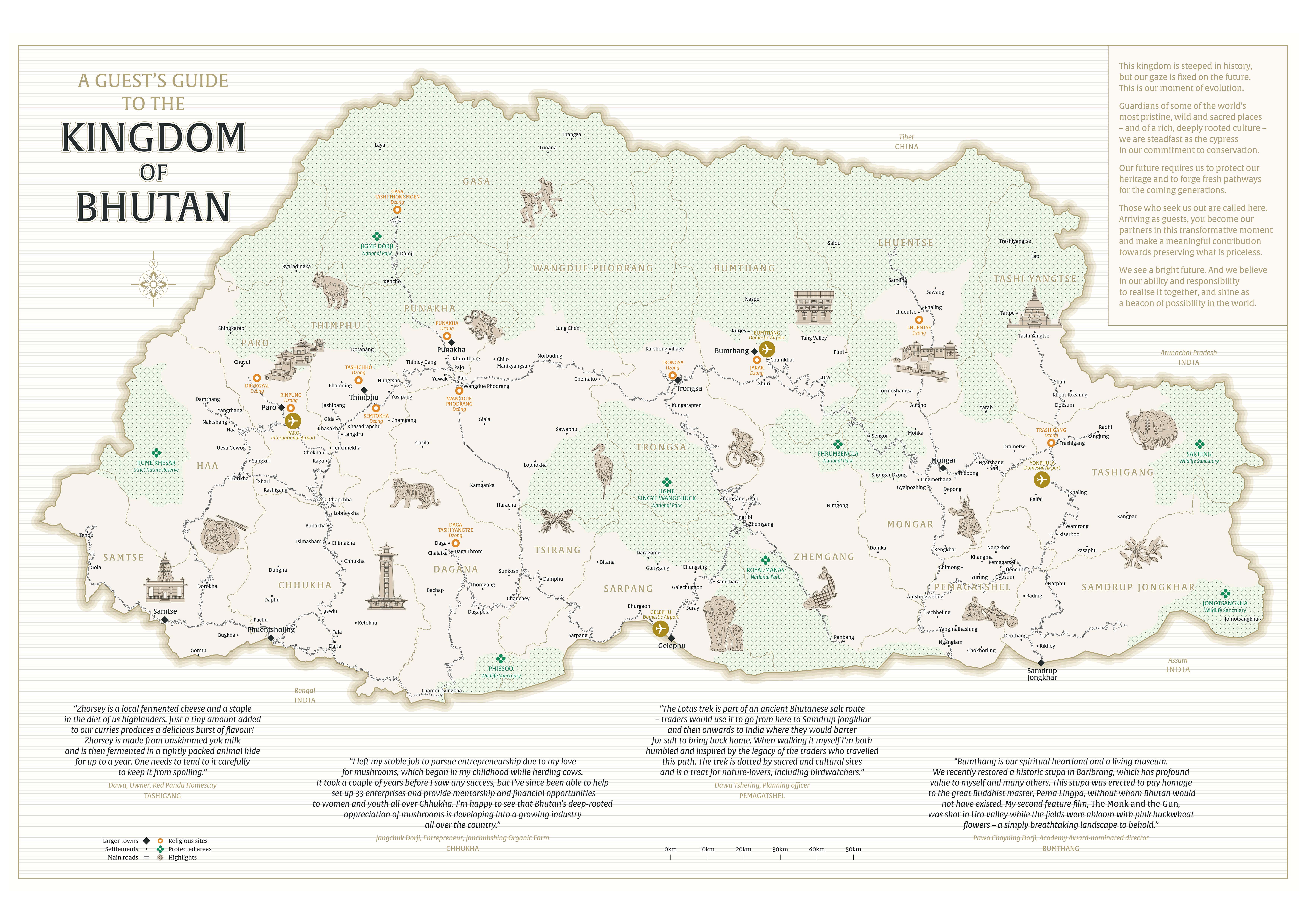
Explore the valleys, mountain passes and cultural landmarks that shape journeys across the kingdom. Open the interactive map to zoom, pan and discover Bhutan’s most inspiring destinations.
Map Courtesy of the Department of Tourism
Share your interests, dates and travel vision — and allow us to craft a journey shaped by Bhutan’s rhythm, beauty and warmth.
Speak with us